
Core Team
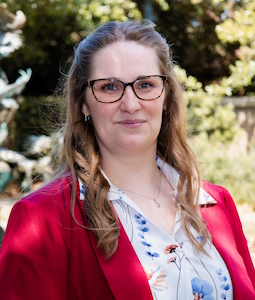
Megan Byers, LMSW, CSWM
Co-Director
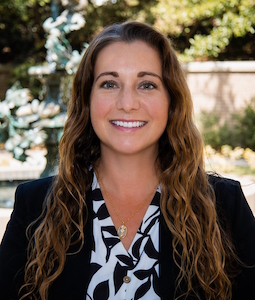
Maggi Miller, PhD
Co-Director
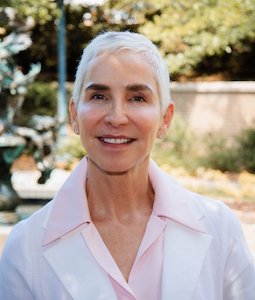
Beverly Wilson, MPH
Program Coordinator
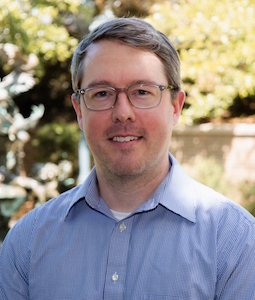
Matthew Lohman, PhD
Research Faculty

Daniel Amoatika
Research Associate
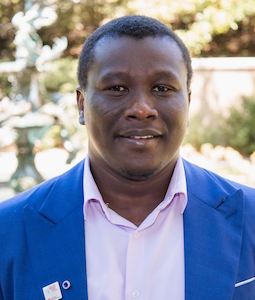
Eric Mishio Bawa
Graduate Assistant

Joshua Bautista
Graduate Student
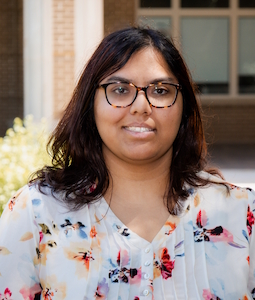
Mansi Verma
Graduate Assistant
Service and Collaborations
- Arnold School of Public Health Research Advisory Council
- Alzheimer’s Resource Coordination Center | Advisory Council
- Age-Friendly Public Health Systems | Advisory Committee
- Building Capacity for Patient-Centered Cancer Research with Older Adults | Advisory Board
- Long Term Services and Supports + No Wrong Door | Governing Body
- Long-Term Care | Leadership Council
- Social Isolation in Older Adults Taskforce | Steering Committee
- Multisector Plan for Aging in South Carolina | Champion
Joshua Bautista is an MPH student in Epidemiology in the Arnold School of Public Health. He has a background in entering and maintaining electronic health record (EHR) data in clinical settings, with a focus on cardiac and electrophysiologic data. His research interests include Alzheimer’s Disease and Related Dementias (ADRD), geriatric caregiver support, cardiology, and psychiatric epidemiology.
Beverly Wilson has over 24 years at the USC School of Medicine Columbia where she led efforts to advance community health and expand access to resources that support healthy living. She is the Co-Founder and former Executive Director of FoodShare South Carolina. Beverly is passionate about improving food access and promoting health equity through community-based initiatives. As the Program Coordinator for the Office for the Study of Aging, Beverly supports aging-related initiatives, contributes to education and outreach, and works to strengthen programs that improve the lives of older adults and their communities.
Dr. Matthew Lohman is an Associate Professor of Epidemiology in the Department of Epidemiology and Biostatistics and is a research faculty member of the OSA. His primary research areas are in psychiatric epidemiology, gerontology, geriatric mental health services, and the epidemiology of adverse health outcomes such as falls, hospitalizations, and acquired disabilities among older adults. Dr. Lohman is particularly interested in the role of long-term care services and settings, such as nursing homes and home health care nursing, in the prevention of age-related cognitive and physical decline. He has been Principal and Co-Investigator for several completed and ongoing projects funded by the National Institute on Aging and National Institute of Mental Health. He currently teaches epidemiological methods and psychiatric epidemiology for master’s and doctoral students.
Maggi Miller has 20 years of experience in aging-related public health research and practice. She received her MS in health promotion from the University of Delaware and a PhD in epidemiology from the University of South Carolina Arnold School of Public Health. She is a research assistant professor in the Department of Epidemiology and Biostatistics. At the OSA, Dr. Miller manages the SC Alzheimer’s Disease Registry. Her research interests include Alzheimer’s disease and related dementias epidemiology and the investigation of risk factors related to the development and progression of the disease, as well as the impact of caregiving on those that provide care for individuals with dementia.
Megan Byers (she/her) has over a decade of experience working with adults and adults with disabilities. Her experience spans policy development, training and curriculum design and implementation, grant writing and evaluation, and legislative monitoring to assess impacts on vulnerable adult populations. She has educated community members and stakeholders on issues related to elder abuse and dementia, taught as an adjunct instructor at universities on social work, gerontology, and grief and loss, and presented at both state and national conferences. Megan holds a Master of Social Work with a Graduate Certificate in Gerontology and is a Licensed Master Social Worker and Certified Social Work Manager.
Mansi Verma is a PhD student in Epidemiology in the Arnold School of Public Health. She holds both a Bachelor of Science in Neuroscience and a Bachelor of Science in Psychology at Michigan State University, and a Master of Public Health in Epidemiology at the University of Michigan. Her research interests include dementia, mental health conditions such as depression and anxiety and social determinants of health.
Eric Mishio Bawa is a PhD candidate in Epidemiology at the Arnold School of Public Health. His research interest includes epidemiological methods, Alzheimer Disease and Related Dementias, maternal and child health, and non-communicable diseases. His current work focuses on using causal inference methods to study health outcomes, while supporting the management of the South Carolina Alzheimer Disease Registry (SCADR). Eric also has experience with advanced epidemiological methods and statistical analysis, which he uses to translate research findings into evidence that inform public health practice and policy.
Daniel is a doctoral candidate in Epidemiology in the Department of Epidemiology and Biostatistics and a graduate of the Ghana Field Epidemiology Program, with a competency certificate in Field Epidemiology from GFELP and the Centers for Disease Control and Prevention. His research focuses on aging, cognitive decline, HIV/AIDS, causal inference, pharmacoepidemiology, and the application of artificial intelligence to predict outcomes in Alzheimer’s disease and related dementias (ADRD). He has experience working with large-scale registry, administrative claims, and electronic health record data, applying both traditional statistical methods and machine learning approaches to support ADRD outcomes research. His dissertation examines the association between polypharmacy and mortality risk in the South Carolina Alzheimer’s Disease Registry (SCADR), the mediating role of polypharmacy in the relationship between comorbidity burden and fall risk, and the use of machine learning methods to predict mortality in SCADR.